Quick answer
Is Teflon safe? What the evidence actually says
Mostly yes, if you never heat it empty. The bigger question is that PTFE is itself a PFAS, and regulators are starting to treat it that way.

For cooking, PTFE (Teflon) is inert at normal temperatures. The documented risk is an empty pan on high heat, which releases fumes that can kill pet birds. Scratches are much weaker evidence. But PTFE is a PFAS, and Minnesota has banned it from cookware.
Three things worth knowing
Published breakdown figures run from about 260°C to 400°C. A dry pan on high heat gets there fast. Cornell’s vet college documents three ducks dying within twelve hours of PTFE fumes.
The US EPA says there is “no polymer exemption” in its PFAS reporting rule. Minnesota’s regulator: “Teflon™ will be prohibited from use in cookware.”
PFOA was a processing aid that eight big producers committed to phase out by 2015. It says nothing about PTFE. How to read the labels.
A PTFE pan, and the uncoated alternative
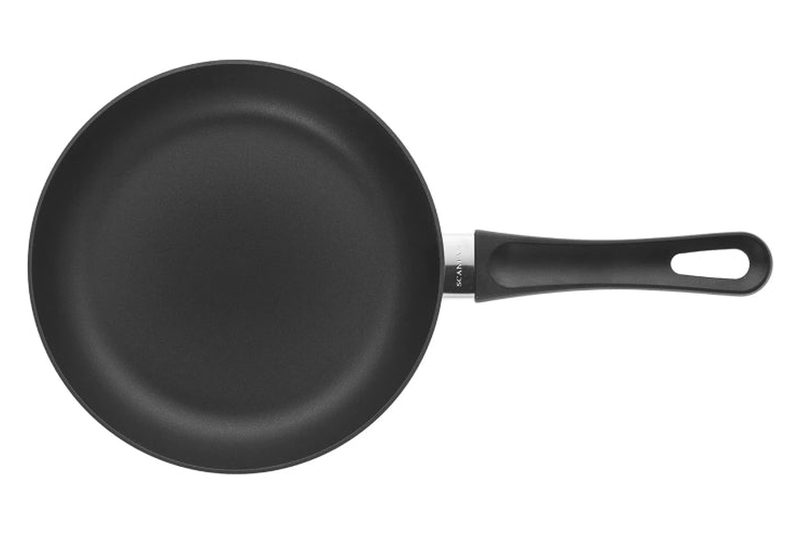 SCANPAN CLASSIC 10.25" Fry PanThe maker’s FAQ says the coating contains “some PTFE”.42/100See the full entry →
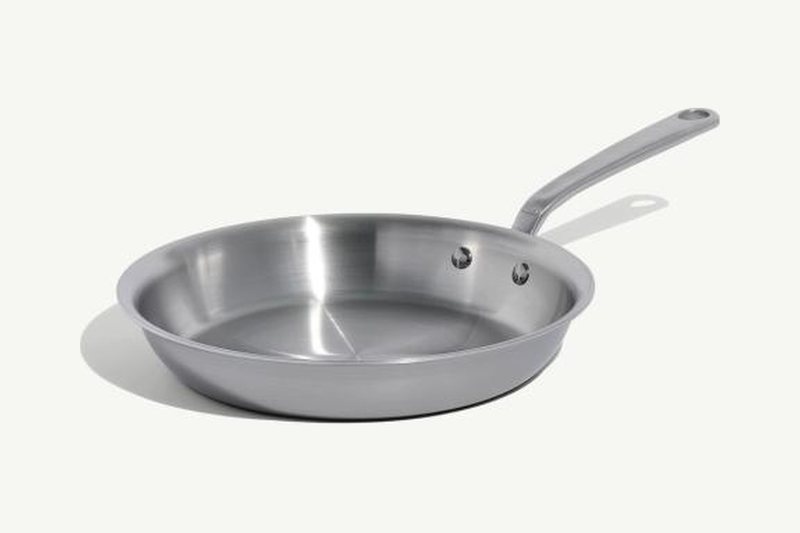 Made In Stainless Clad Frying PanUncoated 18/10 stainless. Nothing to overheat.92/100See the full entry →


PTFE pans we have scored
These makers name PTFE (or their filings do). Naming it earns points: you know what you are buying.
| Product | Score /100 | What touches the food | Our call |
|---|---|---|---|
| 42 | 14/60 | Read the caveats | |
| 42 | 14/60 | Read the caveats | |
| 39 | 14/60 | Read the caveats | |
| 42 | 14/60 | Read the caveats | |
| 42 | 14/60 | Read the caveats |
- 42/100
- No maker photo42/100
- No maker photo39/100Kirkland Signature 12-Piece Non-Stick Cookware Set · US
PTFE non-stick on hard-anodised aluminium
The full entry → - No maker photo42/100Scanpan Classic Induction Frypan 20cm (Myer / David Jones) · AU
“Stratanium” coating, which Scanpan states contains PTFE
The full entry → - No maker photo42/100Circulon ScratchDefense A1 Frypan 25.4cm (Myer) · AU
Three-layer “ScratchDefense” coating — the maker’s own filing lists PTFE, FEP and PFA
The full entry →
What about scratches?
A 2024 study counted thousands of particles from a damaged PTFE surface. Those are real counts, not a health finding. Flaking means replace it; fine scratches on an intact coating don’t. When to throw a pan away.
Questions people ask
Is Teflon cookware safe to use?
At normal cooking temperatures PTFE is inert. The documented risk is overheating an empty pan, which releases fumes. Keep the heat at medium, always have food or oil in the pan, and keep birds out of the kitchen.
Is Teflon a PFAS?
Yes. PTFE is a fluoropolymer and falls inside the OECD, EPA and several US state definitions of PFAS. The EPA says there is no polymer exemption in its PFAS reporting rule.
Is PFOA still used in Teflon?
The eight largest fluoropolymer makers committed to eliminating PFOA by 2015 under a voluntary EPA programme, and all say they met the goal. So “PFOA-free” is true of almost every pan sold today and tells you little.
Should I throw away a scratched non-stick pan?
Replace it if the coating is flaking, blistering or showing metal. Fine scratches on an intact coating are cosmetic. The evidence on swallowed flakes is weak; the evidence on overheating is not.
What is a safer alternative to Teflon?
Uncoated stainless steel or cast iron removes the coating question. Ceramic sol-gel is PTFE-free but its recipe is proprietary. Ceramic vs stainless compares them.
Related
Sources
- US EPA, TSCA section 8(a)(7) PFAS reporting rule FAQ (May 2024). www.epa.gov
- Minnesota Pollution Control Agency, 2025 PFAS prohibitions. www.pca.state.mn.us
- US EPA, Fact Sheet: 2010/2015 PFOA Stewardship Program. www.epa.gov
- Cornell University College of Veterinary Medicine, PTFE (Teflon) toxicosis in ducks (2021). www.vet.cornell.edu
- BBB National Programs, National Advertising Division decision concerning Caraway Home (2025). bbbprograms.org
- Cole et al. (2024), Science of the Total Environment 929:172577. pubmed.ncbi.nlm.nih.gov
- SCANPAN FAQ. www.scanpan.com
- SCANPAN CLASSIC 10.25" Fry Pan — maker or retailer page. www.scanpan.com
- All-Clad HA1 Nonstick 12" — maker or retailer page. www.all-clad.com
- Kirkland Signature 12-Piece Non-Stick Cookware Set — maker or retailer page. www.costco.com
- Scanpan Classic Induction Frypan 20cm (Myer / David Jones) — maker or retailer page. scanpan.com.au
- Circulon ScratchDefense A1 Frypan 25.4cm (Myer) — maker or retailer page. www.circulon.com.au
- MessyPig materials rubric. MessyPig materials rubric
Related pages
One useful email a fortnight
New scores, brands that finally answered, and any rule change that affects what you can buy. The list is not open yet — email us and we will add you when it is.