Brand review
Is the Ninja Crispi safe? What the glass does and doesn’t cover
The Ninja Crispi is sold on glass. The glass is real, and in Australia it is even named as borosilicate. But the food sits on a crisper plate, and Ninja either calls that coating “non-toxic” without naming it, or does not describe it at all.

We cannot tell you whether a Ninja Crispi is safe to cook in. We have no laboratory. What we can do is read what Ninja publishes about each version, and the three versions we checked do not say the same thing.
It is a disclosure score out of 100, not a safety rating: what it is made of, who tested it, where it is made, whether the claim matches the evidence. A product can score 20 and be perfectly fine to cook in. What a low score means is that nobody outside the company can check. The rubric is here.
What they publish, point by point
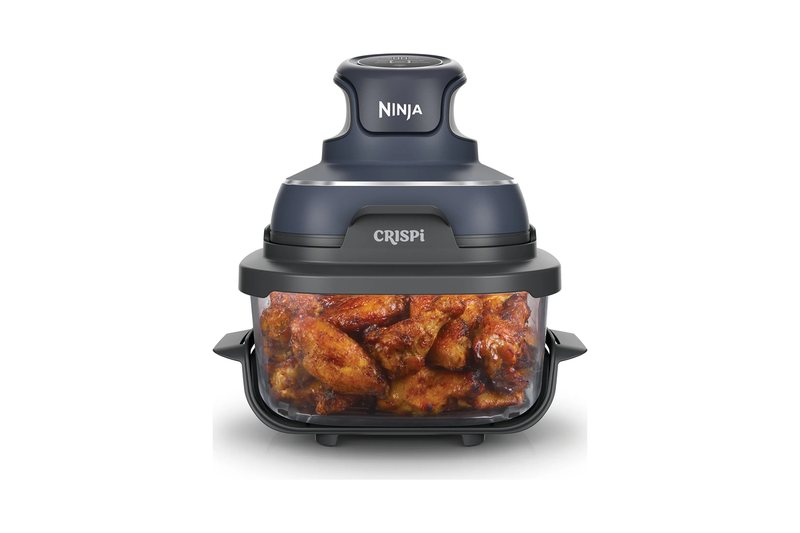
Ninja Crispi Portable Glass Air Fryer — 43/100 · coated, or plastic in contact

- What touches the food — 26/60. Glass containers, type not named · “the coating on the basket, divider, and crisper plates are PFOA free and non-toxic” — no substrate, no chemistry
- The rest of it — 17/25. Lids, seals, handles and the outside.
- Backed up — 0/15. Named testing, published reports, and whether the claim matches the evidence.
- Made in. UNVERIFIED — not published
- They claim. "PFOA free and non-toxic"
- Warranty. UNVERIFIED — not published
- Heat. Maximum temperature not stated on the FAQ; hand wash the containers, plates and lids
Sold on the strength of the word “glass” — and Ninja’s own FAQ confirms the basket, divider and crisper plates are coated.
The glass is the container. The surface directly under the food is not glass, and its chemistry is given as “non-toxic”, which is the vaguest material statement we found in this category.
The full entry, with every source · The maker’s own page
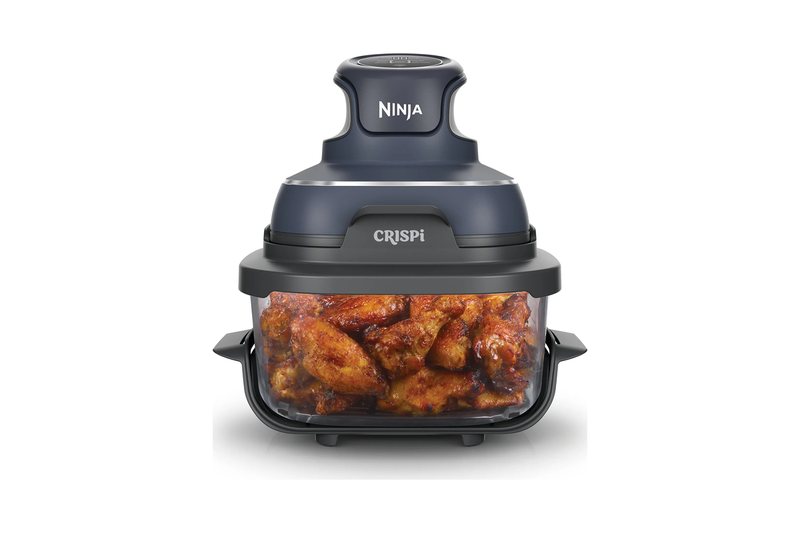
Ninja Crispi 4-in-1 Portable Glass Air Fryer — 21/100 · coated, plastic, or unnamed
- What touches the food — 8/60. Borosilicate glass containers · two crisper plates, material and coating not stated
- The rest of it — 13/25. Lids, seals, handles and the outside.
- Backed up — 0/15. Named testing, published reports, and whether the claim matches the evidence.
- Made in. UNVERIFIED — not published
- They claim. "non-toxic cooking and storage" — asserted of the glass, not the plates
- Warranty. 2 years
- Heat. All accessories dishwasher safe
Sold on glass, and the glass is properly named — borosilicate, which is the right answer for something cycled from freezer to 200°C.
But it ships with two crisper plates that sit under the food, and neither the retailer nor SharkNinja’s Australian page says what they are made of. The food does not rest on the glass; it rests on the plate.
The full entry, with every source · The maker’s own page
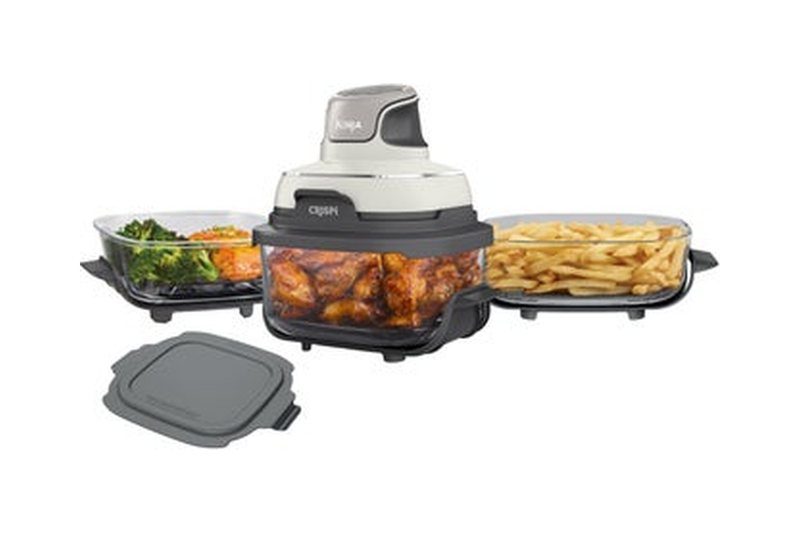
Ninja Crispi 5-in-1 Glass Air Fry System (Costco) — 16/100 · coated, plastic, or unnamed

- What touches the food — 8/60. Glass containers, type not stated · crisper plate material and coating not stated
- The rest of it — 8/25. Lids, seals, handles and the outside.
- Backed up — 0/15. Named testing, published reports, and whether the claim matches the evidence.
- Made in. UNVERIFIED — not published
- They claim. No PFAS, PFOA, PTFE or BPA claim
- Warranty. UNVERIFIED — not published
- Heat. Dishwasher safe parts
Sold on “Glass” in its own product title, and the glass type is not published — which matters enormously for a vessel cycled to 450°F.
Borosilicate and tempered soda-lime behave very differently under thermal shock. The Australian listing for the sibling model does name borosilicate. This one does not.
The full entry, with every source · The maker’s own page
The glass is the container. The food rests on the crisper plate, and Ninja either calls that coating “non-toxic” without naming it, or does not describe it.
How it compares with other glass air fryers
| Product | Score /100 | What touches the food | Our call |
|---|---|---|---|
| 81 | 60/60 | Best material | |
| 64 | 47/60 | Fine | |
| 53 | 53/60 | Fine | |
| 43 | 26/60 | Read the caveats | |
| 21 | 8/60 | Read the caveats | |
| 16 | 8/60 | Avoid |

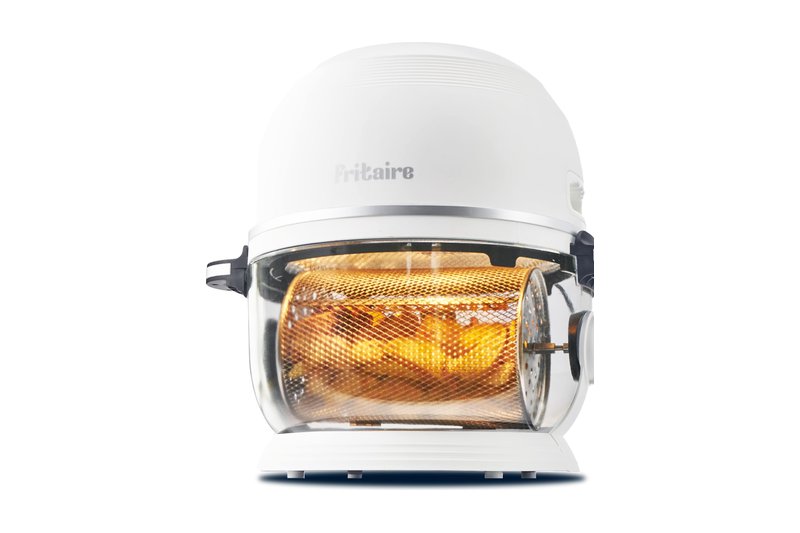
- 81/100
- No maker photo64/100Cuisinart ClearView 4 qt Glass Basket · US
“Transparent glass basket”, glass type not named
The full entry → - No maker photo53/100
- 43/100
- 21/100
- 16/100
 Ninja Crispi 5-in-1 Glass Air Fry System (Costco) · US
Glass containers, type not stated
The full entry →
Our verdict
A glass container with a coated plate in it. Ninja’s own FAQ confirms the basket, divider and crisper plates are coated, and describes the coating only as “PFOA free and non-toxic” — no substrate, no chemistry. The Australian listing names borosilicate glass, which is the right answer for a vessel that goes from freezer to oven, but says nothing about the plates. The Costco set states no glass type and makes no PFAS, PFOA, PTFE or BPA claim.
If you want a glass air fryer specifically to avoid coatings, the Fritaire is the only one we have scored that says there are none. For the rest of the Ninja range, see Ninja materials, scored.
Questions people ask
Is the Ninja Crispi glass borosilicate?
The Australian Ninja Crispi 4-in-1 listing names borosilicate glass. The US Ninja Crispi FAQ we checked and the Costco 5-in-1 set do not state the glass type.
Does the Ninja Crispi have Teflon (PTFE)?
Ninja does not say. Its FAQ calls the coating on the basket, divider and crisper plates “PFOA free and non-toxic”. PFOA-free does not rule out PTFE — here is why. Without the chemistry named, nobody outside Ninja can say.
Is the Ninja Crispi non-toxic?
“Non-toxic” is Ninja’s word, not a material. We score what is disclosed: 43/100 for the US model, 21/100 in Australia and 16/100 for the Costco set.
Does food touch the glass in a Ninja Crispi?
When the crisper plate is in, the food rests on the plate, not the glass. That plate is the part whose material Ninja either describes only as coated or does not describe.
Related
Sources
- Ninja Crispi Portable Glass Air Fryer — maker or retailer page. ninjakitchenapac.zendesk.com
- Ninja Crispi 4-in-1 Portable Glass Air Fryer — maker or retailer page. www.jbhifi.com.au
- Ninja Crispi 5-in-1 Glass Air Fry System (Costco) — maker or retailer page. www.costco.com
- Ninja Crispi FN101 FAQ (SharkNinja). ninjakitchenapac.zendesk.com
- MessyPig materials rubric. MessyPig materials rubric
Related pages
One useful email a fortnight
New scores, brands that finally answered, and any rule change that affects what you can buy. The list is not open yet — email us and we will add you when it is.